README
Taste and Feeding Bench
experimentNo. 0005categoryLabs & sensesrecordingpendingdataCC BY 4.0
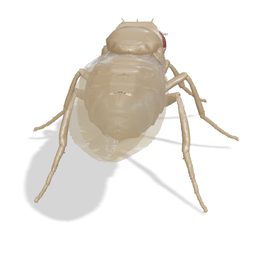
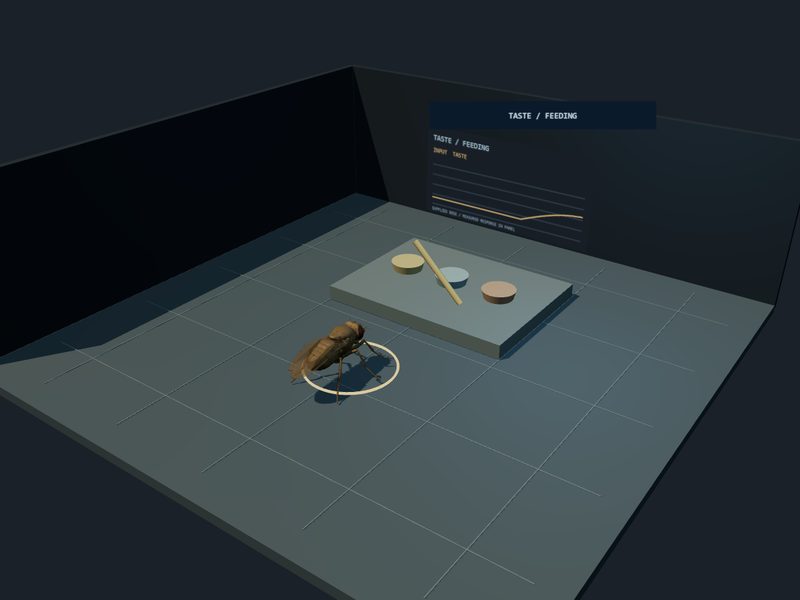
A probe contacts annotated labellar or taste-peg afferents of the fly and proboscis motor output (MN9) is measured. MN9 can also be driven directly as an actuator check.
Recording pending publication. Follow along for the release.
Setup
- A bench with three cups and a contact probe tip.
- Channels: labellar taste contact, taste-peg contact (claw and dorsal tpGRN) and proboscis motor output (MN9).
- Side both, left or right; amplitude 0–1.2; cameras Arena, Fly, Plan, Stimulus.
Measurement
- Paired measurement: stimulus and disconnected branches with the same seed; default 0.2 s baseline, 1.2 s stimulus, 0.2 s recovery.
- Annotations resolve retained MN9 source IDs 10331 and 16949, which the processed model labels CB0701.
- Direct MN9 stimulation is an actuator check, not an independent feeding decision.
Limitations
- Chemical tuning is absent from these annotations; sweet and bitter are not inferred.
- Taste-peg claw cells are not leg proprioceptors.